Group Therapy in Springfield, MO
Some healing happens best in a room full of people who understand.
Our therapy groups gather people across southwest Missouri and the Springfield, Missouri community around a shared topic, so no one has to carry it alone.
- Topic-focused groups
- Process-oriented
- New groups through the year
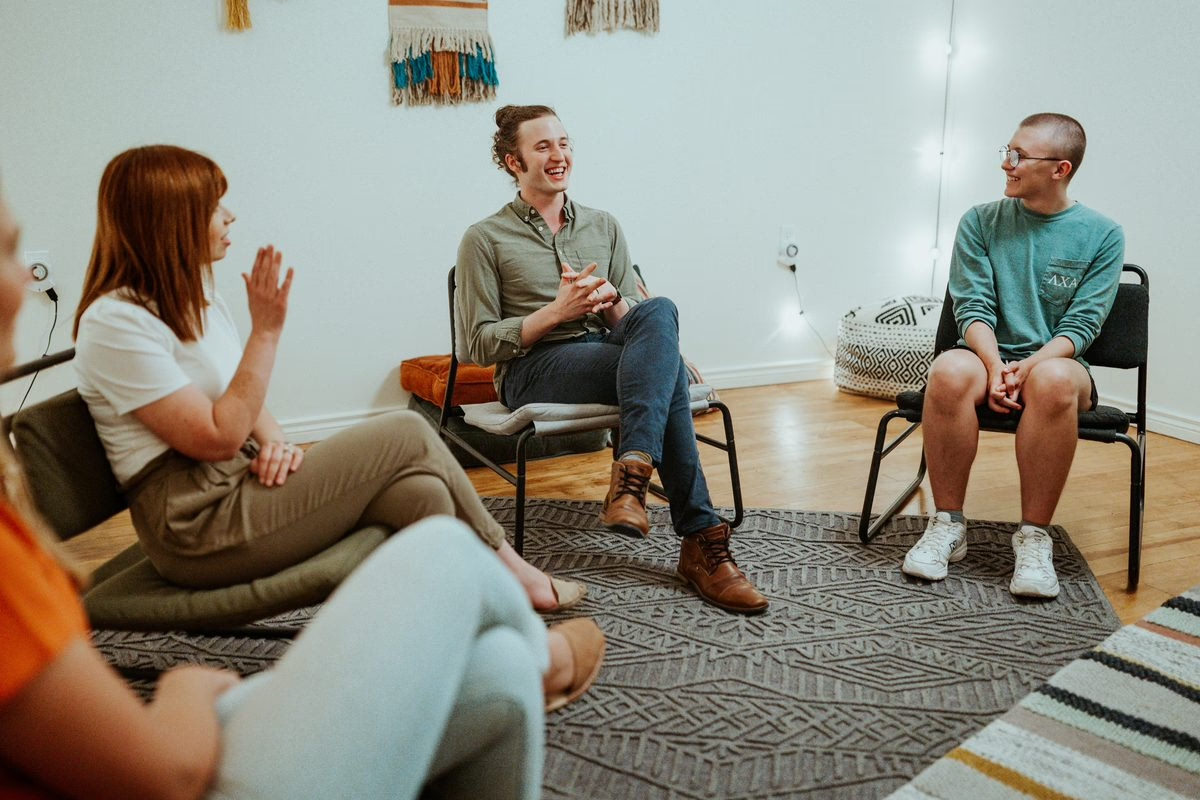
What group therapy is like here
Each of our groups centers on one topic, such as disordered eating and body image, religious trauma, or imposter syndrome. A general curriculum guide gives each group its shape, but the heart of the work is the conversation in the room.
In that sense our groups feel like process groups. Members share what they are carrying, listen to one another, and notice what happens between them as it happens. Often the most healing moment is hearing someone else say the thing you thought only you felt.
Groups we have offered
Disordered eating and body image
A space to talk about food, bodies, and shame with others who know that struggle from the inside.
Religious trauma
For people working through painful experiences in faith communities, whatever their relationship to faith is now.
Imposter syndrome
For people who feel like a fraud despite their accomplishments, and want to understand where that comes from.
Topics change as new groups form.
The interpersonal neurobiology of groups
Our facilitators draw on principles from Susan Gantt and Bonnie Badenoch’s work on the interpersonal neurobiology of group psychotherapy. In that view, a group is more than a set of individuals taking turns. The relationships in the room, and how safe the room feels, shape what each person can risk saying.
So the facilitator’s first job is to help the group become a place where people feel safe enough to be real. From there, members can experience being seen and accepted by others, which is often exactly what the topic has made hard.
This fits with the rest of our work, from Somatic Integration and Processing to the way we approach play therapy: attention to the nervous system, inside real relationships.
How a group session feels
Shape without rigidity
A curriculum guide keeps the group on its topic, and the conversation follows what the group needs that day.
You choose how much to share
Listening is participating too. Many people speak more as the group becomes familiar.
Noticing what happens between us
Reactions, connections, and discomfort in the group become part of the work, gently and with care.
Witnessing and being witnessed
Hearing other people’s stories often loosens the shame that grows when a struggle stays private.
Our group facilitators
Our groups have been led by Angel Jones, PLPC, and Pfifer Malkmus, LPC, along with counselors in training from our internship program.
Our group therapy schedule changes throughout the year. Please contact our office for information on current or upcoming groups.
Being a part of a group and space curated for safety and acceptance around the topics of food and body image was so healing. Sharing my story and witnessing other individuals’ stories helped me to process and release feelings of shame I have carried for years. I was nervous about the group format, but it was so helpful to feel the support of the group and not feel alone in the process.
Food & Body Group Therapy Client
What the research says
Both items below are free to read.
Group works as well as individual therapy
This review summarizes the research showing group therapy is as effective as individual therapy for many concerns, including anxiety, depression, grief, and eating disorders. It also describes what group offers beyond symptom relief: belonging, purpose, hope, and the chance to help others.
Worth knowing: this is a practice-focused review that draws on earlier meta-analyses rather than new data.
C. L. Marmarosh, S. Sandage, N. Wade, L. E. Captari, and S. Crabtree, 2022, Research in Psychotherapy
A body image group added to eating disorder care
Thirty-six adolescents and young adults already in eating disorder treatment joined a 12-session body image group. Most who were referred enrolled and stayed engaged, and those who took part showed less negative body image and fewer eating disorder symptoms. Participants asked that groups speak to all genders and body sizes.
Worth knowing: there was no comparison group, and this is a preprint that had not yet completed peer review when posted.
C. R. Drury and colleagues, 2025, medRxiv
Cost and insurance
Ask about group rates when you call. For counseling in general, most of our counselors operate on a self-pay basis, and we can provide a superbill for out-of-network reimbursement. Insurance and payment information
Other ways we can help
Group therapy is one part of counseling at Beyond Healing. If you are also looking for medication support, Beyond Healing Psychiatry offers psychiatric evaluation and medication management. Call (417) 641-2406.
Frequently asked questions
Do I have to talk in group?
No. You choose how much to share. Listening is part of the work, and many people find their voice as the group becomes familiar.
How do I find out which groups are running?
Our group therapy schedule changes throughout the year. Call (417) 942-7384 or request a contact to hear about current or upcoming groups.
Who leads the groups?
Our groups have been led by Angel Jones, PLPC, and Pfifer Malkmus, LPC, along with counselors in training from our internship program.
Can I join a group if I am not already a client?
Yes. You do not need to be in counseling here first. When you register for a group, you become a client of Beyond Healing Center, and you are welcome to start individual therapy too if you would like.